


Traveling through virtual time and space to simply see the night sky, as it once was thousands of years ago to simply rediscover the Milky Way from the vantage point it was first seen without requiring a telescope all while sitting in the William M. Thomas Planetarium on Oct. 2. Open to not only students at Bakersfield College but also open to the public.
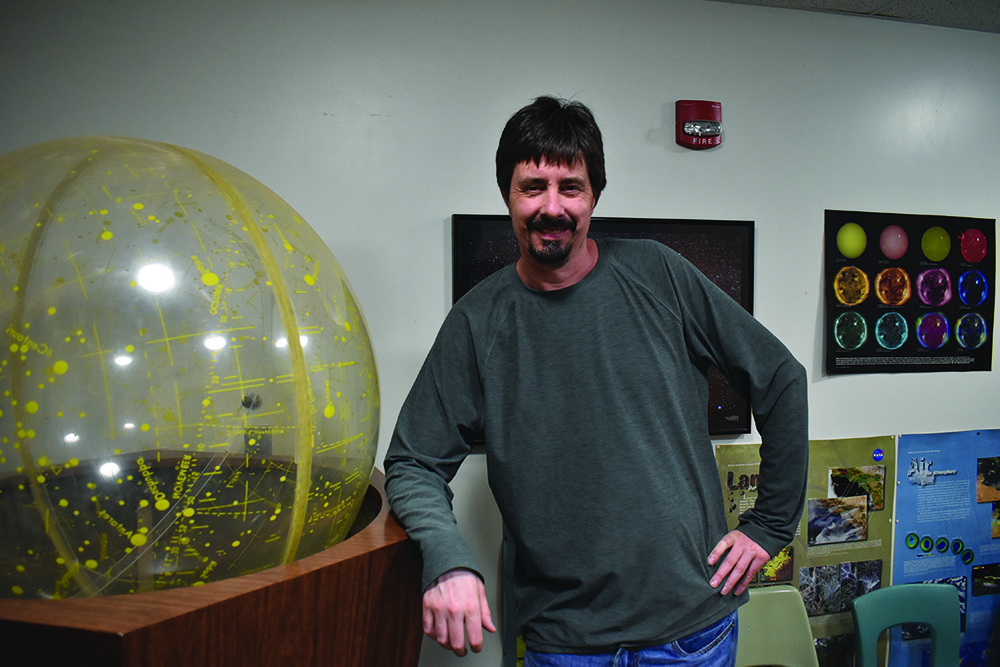
Professor John Menzies, who is also the assistant director of the planetarium revealed an array of nice skies country night sky Bakersfield night sky, which was polluted by light as well as the night sky from way before our time.
Menzies spoke about averted vision while looking at the stars. Certain stars you are unable to visibly see when looking directly at their location. So, he explained that everyone would have to utilize peripheral vision by looking either to the left or right of the area he pointed at with the red laser pointer and miraculously everyone could see what he was talking about. Giggles were heard around the planetarium.
One BC Student had this to say about the Bakersfield night sky displayed, Mary Gregory stated, “it was accurate to life, and I was pretty impressed with the projector.”
Light pollution is a real thing that affects the night skies every day. That is why every night when people look up at the sky, they cannot always clearly see the stars. For
many cases when there exciting astrological events people typically drive away from the city lights to see what is happening above them.
The “Mars: One Thousand One” video was shown to portray what a trip to Mars could one day be like with real life issues that astronauts could potentially face.
Joshua Quiroz-Aldana explained his thought on the Mars video, “I think it was very eye-opening…”
The audience was full of BC students and families alike.
When I asked what he hoped everyone got from the show, Menzies explained, “a greater appreciation. And for younger people who attended that it will spark their interest in science, and they pursue it in college.”